


Indentation Energy Difference Method Included in GB/T 30583—2026, Marking Its Entry into the National Standard System
Indentation Energy Difference Method Included in GB/T 30583—2026, Marking Its Entry into the National Standard System
The revised national standard GB/T 30583—2026 “Post-Weld Heat Treatment of Pressure Equipment” has been officially released. In this revision, the Indentation Energy Difference Method has been incorporated into Appendix G and listed as an optional method for evaluating post-weld heat treatment effectiveness. Its inclusion signifies that residual stress testing based on instrumented indentation technology has formally entered China’s national standard framework.
For manufacturers of pressure vessels, petrochemical equipment, nuclear components, and large welded structures, this advance provides a more reliable technical basis for assessing residual stress following welding and heat treatment.
1. Residual Stress and PWHT Assessment
Welding-induced residual stress creates a self-equilibrated internal stress field governed by heat input, material characteristics, and structural restraint. Excessively high residual stress can raise the likelihood of stress corrosion cracking, brittle fracture, and dimensional instability.
Post-weld heat treatment (PWHT) is intended to lower peak residual stress and enhance microstructural stability via controlled heating and cooling. In real engineering applications, however, direct quantitative validation of stress relief has long been constrained—especially for large or in-service equipment where destructive testing is not practical.
This situation has driven the demand for localized, non-destructive, and quantitative stress evaluation techniques.
2. Development of the Technical Approach
China has already issued the foundational standard GB/T 39635-2020 Metallic Materials — Instrumented Indentation Test for Hardness, Tensile Properties and Residual Stress. Developed with reference to ISO/TR 29381:2008, this standard has laid the framework for material characterization using instrumented indentation methods.
In welded structures, however, stress gradients and multiaxial stress states are typical and unavoidable.
Conventional indentation analysis typically provides average stress values and cannot effectively distinguish principal stress components, limiting its accuracy in complex welded zones.
The Indentation Energy Difference Method was developed to address this issue. By analyzing the energy variation between loading and unloading processes and applying plastic correction models, the method enables calculation of biaxial residual stress components, thereby improving applicability in welded regions.
3. Validation Through Group Standard
In 2023, the method was published as the group standard T/CSTM 00824-2023 “Residual Stress Measurement of Pressure Equipment — Indentation Energy Difference Method.” The drafting organizations included China University of Petroleum (East China), Jova Glenn Technology Co.Ltd., Sinopec Engineering Incorporation, China Special Equipment Inspection and Research Institute, East China University of Science and Technology, Jiangsu Special Equipment Safety Supervision and Inspection Institute, and Wuxi Zhanghua Pharm&Chem Equipment Co., Ltd.
The collaborative drafting process enabled refinement of theoretical models, testing procedures, and engineering validation methods. Comparative testing indicated good agreement in residual stress distribution trends with conventional indentation strain methods, while offering advantages in field adaptability.
4. Significance of Inclusion in GB/T 30583—2026
Appendix G of GB/T 30583—2026 describes equipment requirements, calculation procedures, and testing steps for the method, and provides reference plasticity coefficients for common metallic materials. Although presented as an informative appendix, its systematic inclusion in the main standard reflects a recognized level of technical maturity.
A dedicated national standard project for this method has also been officially approved, indicating further formalization within the national standard system.
5. Engineering Relevance
The method primarily addresses two long-standing challenges: testing of large or in-service equipment where specimen extraction is impractical, and evaluation of localized mechanical conditions in weld seams and heat-affected zones.
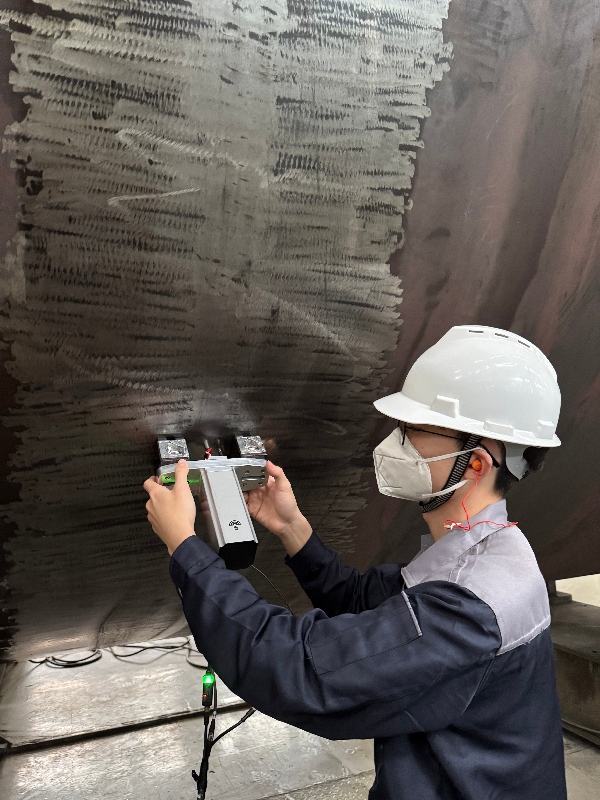
By performing localized indentation tests and applying energy-difference-based calculations, stress components can be obtained without damaging the structure, providing a practical means to evaluate PWHT effectiveness.
The development pathway—from foundational standards to group standard validation and inclusion in a master standard—illustrates the gradual maturation of residual stress testing technology in China’s pressure equipment industry. As related standards continue to evolve, indentation-based testing is expected to play an increasingly standardized role in advanced equipment manufacturing.

CONTACT US
Contacts: Peggy Zhang
Tel: 0086-510-83551210
Wechat: 86 13961802200
86 18118902332
WhatsApp: 86 13961802200
86-18118902332
WhatsApp: 1(805)869-8509
Email: zqz008@126.com,zhangpeijie@zhanghuayaoji.com
vincent_zhang@zhanghuayaoji.com
Address: Shitangwan Industrial Park, Huishan District, Wuxi, PRC
PLEASE CONTACT US.
We are confident to say that our customization service is outsatnding.